About the Film
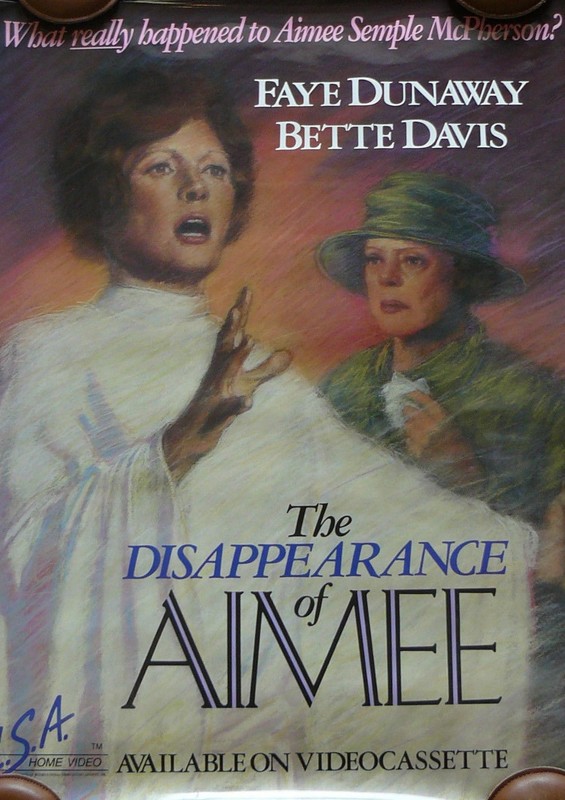
The Disappearance of Aimee premiered on NBC on November 17, 1976, as a presentation of the Hallmark Hall of Fame. It was produced by Hallmark Hall of Fame Productions with Tomorrow Entertainment, directed by Anthony Harvey, and written by John McGreevey. Faye Dunaway played Aimee Semple McPherson, with Bette Davis as her mother, Minnie Kennedy; James Sloyan as District Attorney Asa Keyes; and James Woods as a prosecuting attorney.

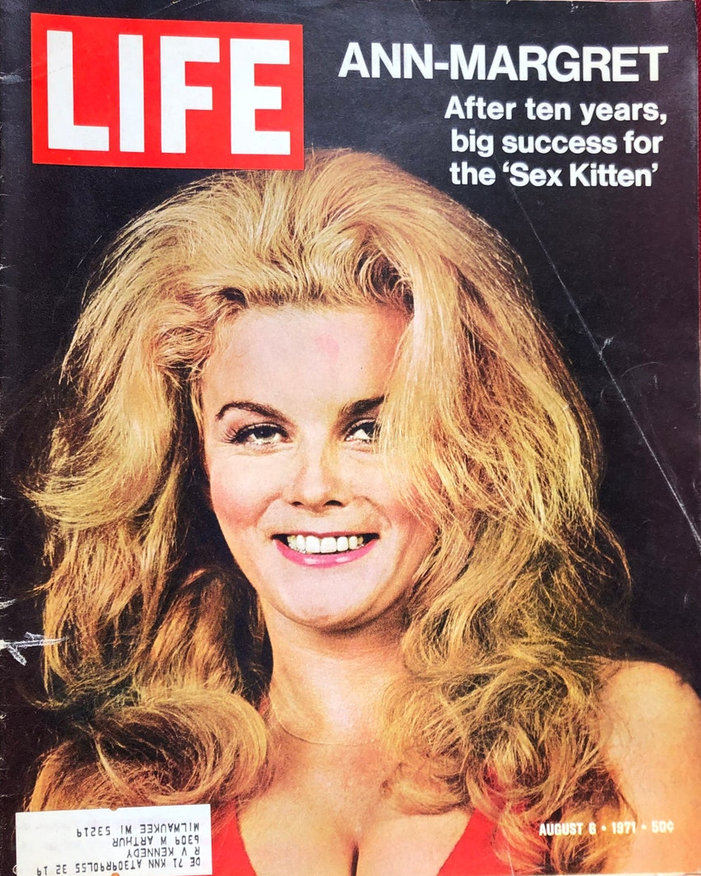
The project's intent was visible well before it aired. In March 1976 the lead was announced as Ann-Margret — then among Hollywood's most marketed sex symbols — in a two-hour NBC special first titled Sister Aimee, billed as her television dramatic-acting debut and focused on the 1926 disappearance, the Arizona reappearance, and the grand jury and trial. She was later replaced by Faye Dunaway, and the title became The Disappearance of Aimee.
The director stated the film's position plainly in the months before broadcast. Anthony Harvey described NBC's picture as a love story: “It is a love story, and it covers her famous four-week disappearance, as well as a court trial which followed.” He went further on the disappearance itself: “We do clearly declare that Aimee spent four weeks in Mexico with her radio engineer,” adding that the matter would be handled tastefully for the small screen — “There are no X-rated love scenes, just some facts.” He also stated the film presents her 1944 death as a suicide by barbiturate overdose, and that the screenplay depicts earlier attempts of suicide.
Two things follow from the director's own words. The film did not merely raise the affair question; it declared the affair as fact (“four weeks in Mexico with her radio engineer”) before a court had. And its suicide framing set the studio's chosen version against the record: McPherson's death was officially reported as an accidental overdose, not a suicide.
Dr. Raymond Cox’s Refute
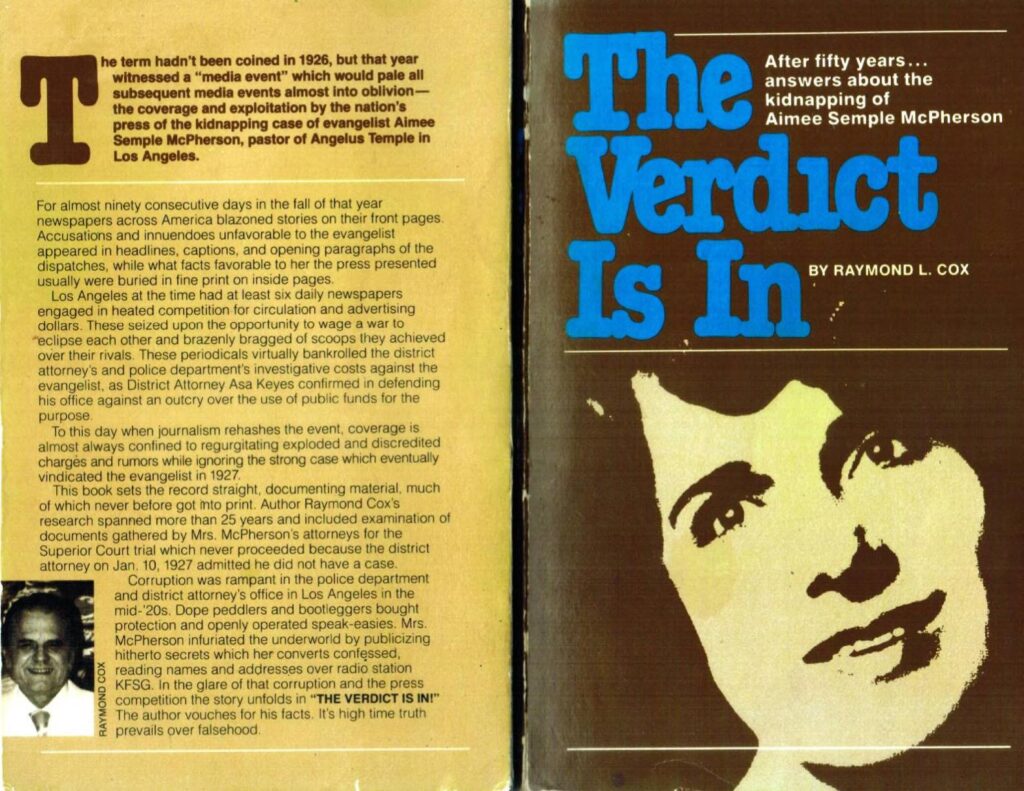
Dr. Raymond L. Cox's research documented numerous factual errors in the production and pressed Hallmark, NBC, and the production company to answer for them. His account of that correspondence was given as the Appendix in his book The Verdict Is In, reproduced here.
Text
[emphasis ours]
Hallmark at first reacted defensively when the numerous errors in the story were documented, including the undeniable fact that the entire last eleven minutes of the dramatization was made up completely out of whole cloth.
Bryan Putman, Vice President of Advertising and Public Relations, wrote me on November 24, 1976,
“We and our agents were assured by both the National Broadcasting Company and the producing company, Tomorrow Entertainment, that the incidents depicted in the script were factually accurate.
“It is my understanding that the legal staff at NBC prepared a 65-page document to that effect.
“Be that as it may, and in view of the fact that we simply are not in a position to respond to the points enumerated in your letter of November 19, am asking that Tomorrow Entertainment and NBC reply in detail to your letter. You will be hearing from these organizations shortly.”
The National Broadcasting Company (NBC) never did submit any documents to me, in spite of repeated proddings from both myself and Hallmark. Sally McGraw, Director of Audience Services did reply to a complaint by Olive G. Cooksey with a letter which proved to be a clone of the production company, Tomorrow Entertainment's correspondence to me. Never at any time did NBC or Tomorrow Entertainment dispute any of the scores of errors of fact which were charged against the production nor offer to honor the request from Hallmark to submit the alleged 65-page document purporting to show that the incidents depicted in the script were factually accurate.
The President of Tomorrow Entertainment in two letters to me virtually conceded the flagrant inaccuracies, misrepresentations, and anachronisms I called to Hallmark’s attention. He claimed that I should “understand that far from discrediting Mrs. McPherson, the film depicted a remarkable valiant and courageous woman who stood up to her accusers and won.” McGraw’s letter to Cooksey contained an identical quote. Would not this circumstance indicate collusion? Personally, I have never met anyone who drew from this film that conclusion, although in fact, Aimee Semple McPherson certainly did stand up to her accusers and win at the time.
Apparently Hallmark likewise was unconvinced by Tomorrow Entertainment's alibis because future letters betrayed a very apologetic tone. By December 17, 1976 William S. Johnson was writing [from] Durella Lane, 370 Montebello Avenue, Ventura, CA, 93003,
“The writers of the show ignored the very effective output of her career and focused instead on the events of her time and the controversy of that time. Hallmark reworked the script several times so that we would not take a position on the charges made against her during her life. We had hoped to be neutral and undramatic.”
In this, Hallmark failed completely. An evidence of the show's bias against Mrs. McPherson is the fact that all of the witnesses shown in the depiction of the preliminary hearing were prosecution witnesses called to testify against the evangelist. Not one witness called by the defense was shown on the screen.
How viciously the script writers defamed Mrs. McPherson was demonstrated during the dramatization of the testimony by Joseph Ryan. After Ryan's outburst against the evangelist which was accurately represented, denouncing her as a “hypocrite and a fake,” the show depicts Mrs. McPherson jumping to her feet and yelling the same epithets at Ryan. Page 1246 of the transcript of the court record, however, shows that Mrs. McPherson made no response whatsoever (cf. lines 25 & 26).
Hallmark's William Johnson continued his reply to Mrs. Lane's letter complaining about the show,
“We agree with you. We missed our own high standards. We offended you and others. And, we are sorry. We ask forgiveness.”
Nevertheless, this production continues being shown, without Hallmark's auspices, on television stations around the country.
Mrs. McPherson's kidnapping earlier became the focus for a monograph, “The Vanishing Evangelist,” by “Lately Thomas” (a nom de plume) and figured prominently in the same pseudonymous author's book, “Storming Heaven.” Both of Thomas’ works are referred to extensively in this book. Robert Bahr’s, “Least of All Saints,” is not noticed because it admittedly is a “speculative biography” and most of the obvious speculations are utterly incredible.
There is no way that an unbiased investigator who examines not only the evidence the media trumpeted against the evangelist but also the massive evidence available in support of her story, can entertain for a moment the idea that Aimee Semple McPherson was the woman with Kenneth Ormiston at the Carmel cottage. The presentation in this book proves that she was not that woman.
The facts that are given in this book are documented and their sources are identified. Most people have never heard anything but the media's regurgitation of the rumors, innuendoes, and misrepresentations about the episode. However, the facts speak for themselves. This book proves that Aimee Semple McPherson told the truth. The verdict is in. Her life and ministry have stood the test of time.
Raymond L. Cox, Th.D., F.R.G.S.
Salem, Oregon
- “Ann-Margret To Play Aimee Semple McPherson,” The Greenville News (Greenville, S.C.), March 1, 1976, p. 32.
- Director Anthony Harvey's statements: syndicated Hollywood column, Ventura County Star, July 27, 1976, p. 13.
- Production and cast credits: Hallmark Hall of Fame broadcast, NBC, November 17, 1976.